From Munduk’s Colonial Retreat to Puri Sunny
A living chronicle shaped by Munduk’s volcanic ridgelines, colonial agronomy, century-old spice forests, and generations of travelers.
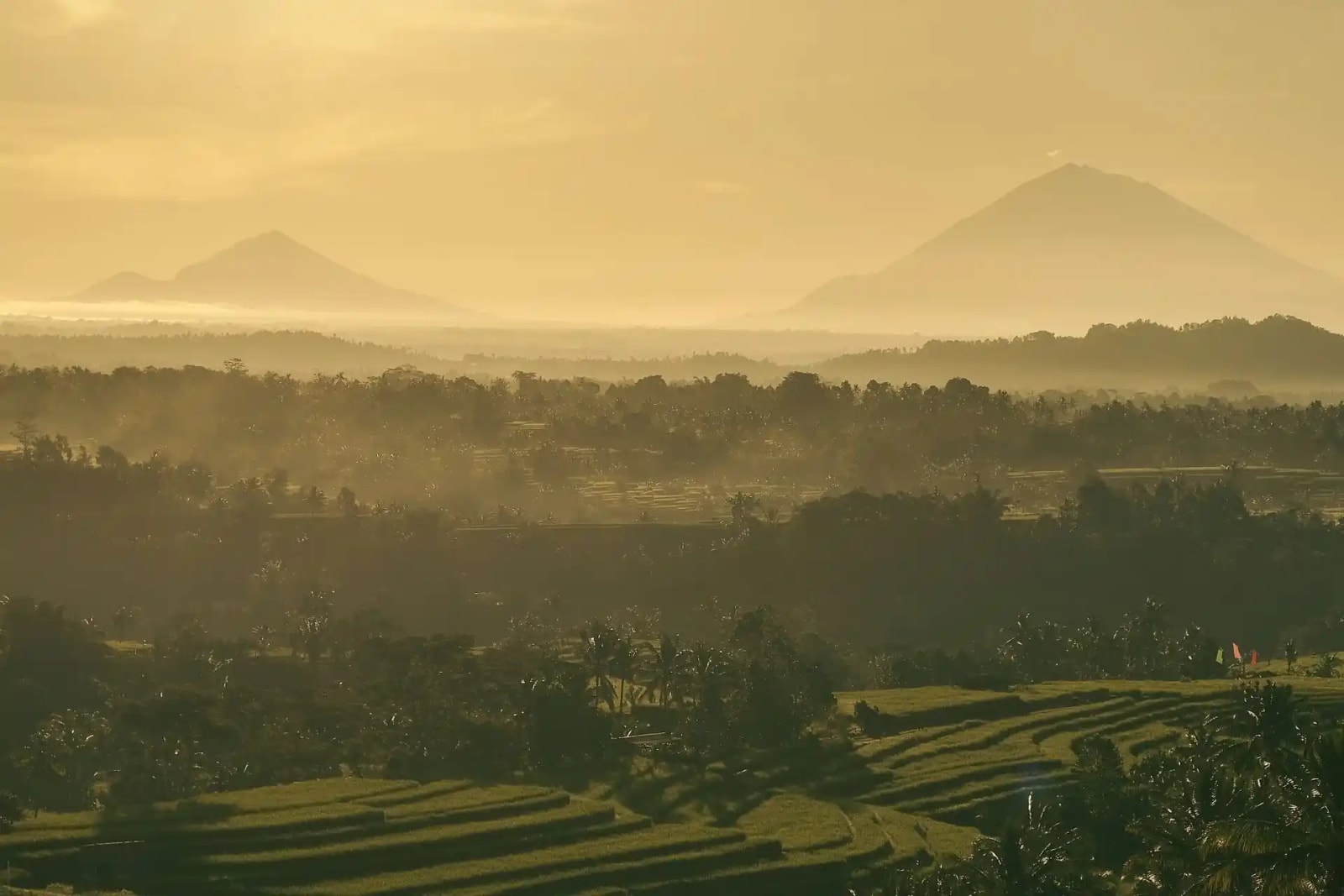
“Munduk highlands, North Bali — A sanctuary of cool mountain air, spice plantations, and historic hospitality.”
Long before Puri Sunny welcomed today’s world, Munduk was already an enduring highland sanctuary sculpted by fertile ash, rainfall, and sacred subak waters.
Perched along the scenic northern amphitheater of Bali’s central spine, Munduk exists in a distinct upland microclimate where crisp dawn mists tumble over forested chasms to reveal sun-bathed clove groves below.
The story of Puri Sunny is inseparable from this mountain geography. It bridges North Bali’s colonial era—when Singaraja, chosen for its natural harbour, served as the capital of Bali and administrators sought reprieve from the coastal heat—to the introduction of Arabica and Robusta coffee, documented visits of noble scholars, and today’s preserved family sanctuary.
Here, hospitality has never been an imported concept. It grew directly out of ancestral Balinese familial welcome, where travelers trekking across the mist were received with freshly roasted mountain coffee, steamed sweet cassava, and an authentic place to rest.
“According to local elders, the forerunner of Bali’s tourism accommodation was a guest house called PESANGGRAHAN Munduk—built around 1908, and known today as Puri Sunny.”
As recounted by the prominent people of Munduk village and preserved in the historical record of Puri Sunny. Further guest houses were later built at Bedugul, Kintamani, and Plaga, followed by the Bali Hotel in Denpasar in 1927—but the lineage of hospitality in Bali began here, in Munduk.
As the centre of Dutch weekend vacations, Munduk village was the starting point for road distances to all parts of Bali—the 0 km mark, at PESANGGRAHAN / PURI SUNNY.
Singaraja, Dutch Administration & The Highland Haven
After the Jagaraga War of 1894, North Bali came under Dutch administration. South Bali fell after the Puputan War of 1908, and Bali remained under Dutch administration until the proclamation of independence on 17 August 1945. Because of its natural harbour, Singaraja was chosen as the centre of Dutch administration—and therefore the capital of Bali.
Set between 500 and 1,220 meters above sea level, with volcanic richness and clear vistas encompassing both the northern Bali Sea and Mount Batukaru, Munduk became the preferred place for weekend vacations for the Dutch.
Munduk functioned perfectly to restore energy—a combination of cold temperatures, quiet, and five elements of nature: space, air, sun, water, and earth, plus wild forest.


Freshly gathered hand-picked Arabica cherries overlooking the terraced clove and coffee slopes of Munduk.
Arabica, Robusta & The Fragrance of Cloves
The land did not merely support travelers; it shaped their entire sensory encounter. The aroma of sun-drying clove flowers and roasting mountain beans remains the signature breath of Munduk.
The Dutch introduced Arabica coffee to Munduk in 1870, due to its location between 500 and 1,220m above sea level. Flourishing in cloud-mist and nutrient-dense soil, the plantings made Munduk famous for producing the best Arabica coffee in Bali.
Following the success of the Arabica coffee plantations, the Dutch introduced Robusta coffee in 1915—followed by cocoa, vanilla, and clove—expanding local agrarian diversity across the middle terraces and ancient rice terraces governed by Bali’s UNESCO-recognized subak collectives.
Alongside coffee, Munduk gained worldwide renown for towering Zanzibar clove trees (cengkeh), shade-grown cacao pods, climbing vanilla orchids, and sacred spring water basins that nourish both life and ceremony.
Agriculture is not an aesthetic backdrop at Puri Sunny; it is our living heritage, practiced daily by our family and team across the surrounding groves.
Around 1908: The Pesanggrahan Munduk
According to the prominent people of Munduk village, preserved in the historical record of Puri Sunny, the forerunner of Bali’s tourism accommodation was a guest house called PESANGGRAHAN Munduk—now PURI SUNNY—built in Munduk around 1908. A pesanggrahan was a colonial-era government guest house—not a hotel in the modern sense.
Known in colonial administrative records as the “Pesanggrahan Munduk”, it served as an official resthouse for touring officials, surveying engineers, and postal couriers traversing Bali’s central volcanic backbone between Singaraja and the southern kingdoms. Further guest houses were later built at Bedugul, Kintamani, and Plaga—and then the Bali Hotel in Denpasar in 1927—but the lineage began here.
As the centre of Dutch weekend vacations, Munduk village was also the starting point for road distances to all parts of Bali—the 0 km mark, at PESANGGRAHAN / PURI SUNNY.
In preserving historical accuracy, village tradition and local documentation designate this founding milestone as “around 1908”, marking the architectural lineage and ancestral welcome that today finds continuation in Puri Sunny Guest House.
1925: A Documented Mountain Haven
In 1925, Munduk was promoted as a popular village destination by K.P.M.—according to the documentation of the Tropical Institute Amsterdam. As the centre of Dutch weekend vacations, the village welcomed a number of prominent Dutch administrators, among them Gov. Gen. H.C.D. de Graff, as well as Dutch scientists who studied its landscape and culture.
These early visitors noted how Munduk combined majestic natural silence with the rhythmic sounds of mountain stream cascades, morning gamelan echoes drifting from temple shrines, and panoramic sunrises that illuminated the volcanic horizon.
Promoted as a popular village destination by K.P.M. in 1925, Munduk’s mountain air was believed to restore the energy of every traveller who stayed—then and now.
Footsteps in the Highland Mist
Throughout the 20th century, Munduk welcomed an array of writers, naturalists, and international figures whose presence remains remembered in North Bali’s living history.
Rabindranath Tagore
The celebrated Indian poet and philosopher Rabindranath Tagore visited Bali in 1927 on an intellectual pilgrimage to witness Balinese dance, classical drama, temple architecture, and living cultural traditions.
According to the historical account preserved at Puri Sunny, Tagore stayed at the guest house (PESANGGRAHAN) in Munduk—today’s Puri Sunny—finding quiet contemplation amidst the misty ridgelines and cool mountain vistas of the island’s earliest guest house.
Mr. Kitamura & The Post-War Era
Following the conclusion of the Second World War, international personnel passed through North Bali during regional transitions. The historical account of Puri Sunny records the stay of Mr. Kitamura—a Japanese nurse soldier—who stayed a while at the guest house (PESANGGRAHAN) in 1946, leaving lasting memories among local host families.
Passed down by village elders as an embodiment of common humanity that transcends conflict.
Scholars & The Lontar Museum
Munduk’s heritage is intimately connected to North Bali’s flourishing intellectual era—Dutch administrator Mr. Lefrink and anthropologist Dr. Goris were very interested in Balinese culture.
Dutch anthropologist Dr. H.N. Van der Tuuck had the idea to establish a Lontar museum and gave his land and building in Singaraja for this purpose. The museum was established on 2 June 1928 and formally opened by Gov. Gen. C.D. de Graff on 14 December 1928. Originally named Kirtya Lefrink van der Tuuck, it is now known as Gedung Kertya.
The Dutch administrator Mr. Lefrink and the anthropologist Dr. Goris stayed in Munduk and were very interested in Balinese culture—weaving the mountain village into the scholarly and cultural life of North Bali during the Dutch era.
A Century of Documented Milestones
A timeline tracing how early plantation soils and colonial resthouses evolved into today’s family sanctuary.
Arabica Coffee Introduced
The Dutch introduce Arabica coffee to Munduk, whose slopes rise between 500 and 1,220m above sea level. Munduk becomes famous for producing the best Arabica coffee in Bali.
North Bali Under Dutch Administration
After the Jagaraga War of 1894, North Bali falls under Dutch administration. South Bali follows after the Puputan War of 1908, and Singaraja—with its natural harbour—serves as the capital of Bali.
The Cradle of Bali's Tourism Accommodation: PESANGGRAHAN Munduk
According to local elders, the forerunner of Bali’s tourism accommodation—a guest house called PESANGGRAHAN Munduk (now PURI SUNNY)—is built in Munduk around 1908. Further guest houses follow at Bedugul, Kintamani, and Plaga.
Robusta, Cocoa, Vanilla & Clove
Following the success of the Arabica coffee plantations, the Dutch introduce Robusta coffee in 1915, followed by cocoa, vanilla, and clove.
Munduk Promoted by K.P.M.
K.P.M. promotes Munduk as a popular village destination—documented by the Tropical Institute Amsterdam—and prominent Dutch administrators and scientists stay in the village.
Rabindranath Tagore's Stay
The Indian poet and philosopher Rabindranath Tagore stays at the guest house (PESANGGRAHAN) in 1927. The same year, the Bali Hotel opens in Denpasar.
The Lontar Museum Founded
Established in Singaraja on 2 June 1928 and formally opened on 14 December 1928 by Gov. Gen. C.D. de Graff. Originally named Kirtya Lefrink van der Tuuck, it is now known as Gedung Kertya.
Indonesian Independence
The proclamation of independence on 17 August 1945 ends Dutch administration in Bali, and the island joins the Republic of Indonesia.
Mr. Kitamura's Stay
After World War II, Mr. Kitamura—a Japanese nurse soldier—stays a while at the guest house in 1946.
Puri Sunny Guest House & Camp
Balinese family-owned mountain sanctuary operating two complementary expressions of highland living: Guest House with 11 rooms and infinity pool in the centre of Munduk Village, and Camp with 12 rooms and a big cold natural pool (without chemicals) on Petaluh Street.
From Heritage to Hospitality
Today, that century-long spirit of mountain welcome is stewarded by Puri Sunny across two distinct sanctuaries in Munduk, each crafted to honor different dimensions of our highland topography.
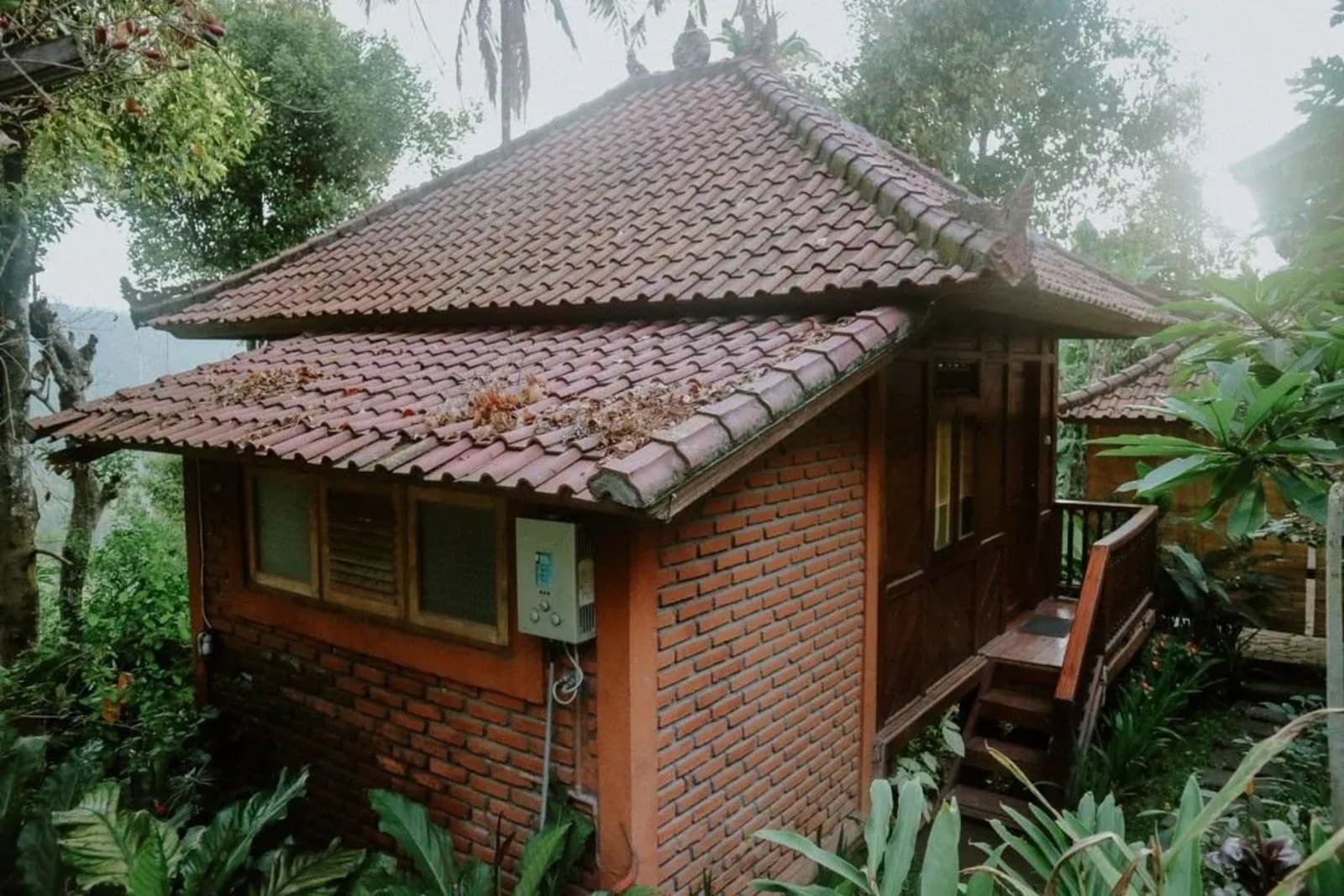
Puri Sunny Guest House
Perched along the historic Kayu Putih village ridge, the Guest House features 11 boutique guest rooms crafted with hand-carved Balinese teak woodwork, private sunset balconies framing Mount Batukaru, and our signature infinity pool floating directly above the cloud forest canopy.
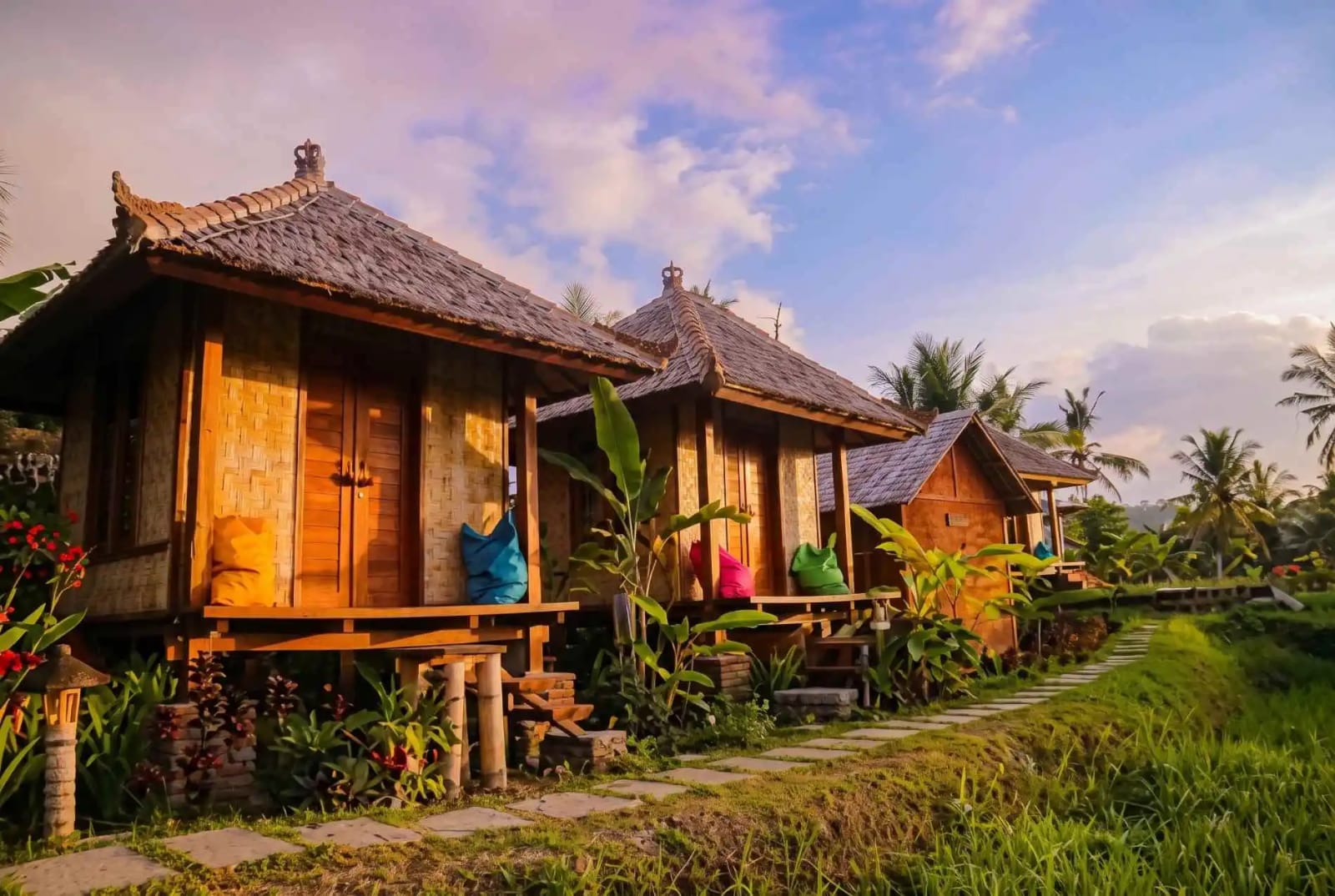
Puri Sunny Camp
Tucked beneath the village into the quiet Petaluh river valley, the Camp offers 12 handcrafted bamboo and timber glamping cottages. Immersed within old clove groves and tree ferns, guests swim in our natural volcanic rock spring pool fed by mountain aquifers without chemical additives.
“Come as guests, leave as friends.”
More than an inscription, this philosophy reflects generations of living Balinese hospitality. We welcome each traveler as an extension of our highland family, sharing our home, table, and the timeless serenity of Munduk.
Experience the Living Serenity of Munduk
Whether you seek the panoramic comfort of our Heritage Guest House overlooking Mount Batukaru, or the rustic immersion of our Nature Camp beside pristine mountain springs, your sanctuary awaits.